
Written by Pedro Brugada
Last Updated on May 28, 2026
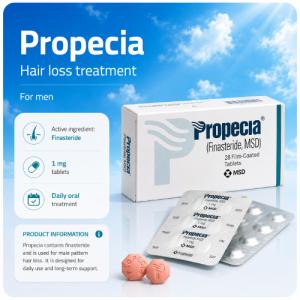
Propecia is a finasteride-based medication used for the treatment of male pattern hair loss, also known as androgenetic alopecia. It is intended to help slow down hair loss and support hair regrowth in men.
The active ingredient in Propecia is finasteride. It works by reducing the level of dihydrotestosterone, or DHT, a hormone that plays an important role in male pattern hair loss. Lowering DHT levels may help protect hair follicles from further miniaturization and support healthier hair growth over time.
This information is provided for educational purposes only and should not replace medical advice. Before starting treatment, consult a healthcare professional to confirm that Propecia is suitable for you.
How Propecia Works
Finasteride helps block the conversion of testosterone into dihydrotestosterone, a more active androgen involved in hair follicle shrinkage. In men who are genetically sensitive to DHT, this process can lead to gradual thinning of hair, especially on the crown and front of the scalp.
By reducing DHT levels, Propecia may help slow the progression of hair loss and, in some cases, promote visible hair regrowth. The effect is gradual, and consistent use is usually required before noticeable results appear.
Finasteride also affects the prostate gland, which is why higher-dose forms of finasteride are used for certain prostate-related conditions. However, Propecia is specifically intended for male pattern hair loss.
Method of Administration and Dosage
Propecia is usually taken once daily, or exactly as directed by a healthcare professional.
Take the tablet at approximately the same time each day. It may be taken with or without food. Do not change the dosage or stop treatment without consulting your doctor.
If you miss a dose, do not take a double dose to make up for the missed tablet. Simply take the next scheduled dose as prescribed.
Hair growth treatment requires time. Visible improvement may take several months, and continued use is usually necessary to maintain the result. If treatment is stopped, the benefits may gradually disappear.
| Dosage | Quantity | Price | Price per Pill |
|---|---|---|---|
| 1 mg | 10 pills | $7.99 | $0.80 |
| 1 mg | 20 pills | $14.99 | $0.75 |
| 1 mg | 30 pills | $20.99 | $0.70 |
| 1 mg | 60 pills | $39.99 | $0.67 |
| 1 mg | 90 pills | $53.99 | $0.60 |
| 1 mg | 120 pills | $65.99 | $0.55 |
| 5 mg | 30 pills | $30.99 | $1.03 |
| 5 mg | 60 pills | $57.99 | $0.97 |
| 5 mg | 90 pills | $78.99 | $0.88 |
| 5 mg | 120 pills | $95.99 | $0.80 |
Note: Prices may vary depending on availability, shipping options, and current promotions.
Contraindications
Propecia is not intended for use in women or children.
The medication should not be used in the following cases:
- Allergy or hypersensitivity to finasteride or any component of the medication
- Use by women who are pregnant or may become pregnant
- Use by children or adolescents
- Use without medical evaluation when the cause of hair loss is unclear
Women who are pregnant or may become pregnant should not handle crushed or broken Propecia tablets, as finasteride may affect the development of a male fetus.
Possible Side Effects
Propecia is generally well tolerated, but side effects may occur in some users.
Possible side effects include:
- Decreased sexual desire
- Difficulty achieving or maintaining an erection
- Reduced semen volume
- Breast tenderness or enlargement
- Testicular discomfort
- Skin rash or allergic reaction
- Mood changes in rare cases
Some side effects may improve after stopping the medication, while others may require medical attention. If you notice persistent or concerning symptoms, consult a healthcare professional.
Seek medical advice immediately if you experience breast lumps, nipple discharge, severe allergic symptoms, swelling of the lips or face, or significant mood changes.
Overdose
There is no specific recommended treatment for finasteride overdose. If an overdose is suspected, seek medical advice or contact a poison control center.
Treatment is usually supportive and based on symptoms.
Pregnancy and Breastfeeding
Propecia is not indicated for use in women.
Women who are pregnant, planning to become pregnant, or may become pregnant should avoid contact with crushed or broken tablets. Finasteride may interfere with the normal development of male genital organs in a male fetus.
It is not recommended for use during breastfeeding.
Drug Interactions
No clinically significant drug interactions with finasteride have been consistently identified in standard use. However, you should still inform your doctor about all medications, supplements, and herbal products you take.
This includes prescription medicines, over-the-counter products, vitamins, and treatments for prostate conditions or hair loss.
Special Precautions
Before starting Propecia, a healthcare professional may need to rule out other causes of hair loss, such as hormonal imbalance, thyroid disease, nutritional deficiency, scalp disorders, or certain medications.
Finasteride may lower prostate-specific antigen, or PSA, levels. PSA is commonly used in prostate screening. If you are undergoing PSA testing, tell your doctor that you are taking finasteride so the results can be interpreted correctly.
Regular medical follow-up may be recommended during treatment, especially for men with prostate-related concerns.
FAQ
What is Propecia used for?
Propecia is used to treat male pattern hair loss in adult men. It may help slow hair loss and support hair regrowth.
What is the active ingredient in Propecia?
The active ingredient is finasteride. It helps reduce DHT levels, which are linked to male pattern hair loss.
How long does it take to see results?
Results are gradual. Many users need several months of consistent treatment before noticing visible improvement.
Does Propecia work for all types of hair loss?
No. Propecia is intended for male pattern hair loss. It may not be effective for hair loss caused by stress, illness, nutritional deficiency, scalp disease, or other medical conditions.
Can women use Propecia?
No. Propecia is not intended for use in women, especially women who are pregnant or may become pregnant.
What should I do if I miss a dose?
Do not take a double dose. Skip the missed dose and take the next one at the usual time.
Can I stop taking Propecia after my hair improves?
If treatment is stopped, the benefits may gradually decrease over time. Continued use is usually required to maintain results.
Are sexual side effects possible?
Yes. Some men may experience decreased libido, erectile difficulties, or reduced semen volume. If these symptoms persist or cause concern, consult a doctor.
Can Propecia affect PSA test results?
Yes. Finasteride may lower PSA levels. Tell your doctor you are taking Propecia before undergoing prostate screening.
Is Propecia safe for long-term use?
Many men use finasteride long term under medical supervision. However, suitability depends on individual health, response to treatment, and possible side effects.
Safety Notice
Propecia should be used only as directed by a healthcare professional. Before starting treatment, it is important to confirm the cause of hair loss and review possible contraindications, side effects, and precautions.