
Mitochondrial dysfunction has been implicated in the etiology of drug-induced cardiotoxicity, one of the most common causes for drug withdrawal. In a recent review, Dykens and Will reported that around 50% of drugs with FDA Black Box Warnings for cardiovascular toxicity have documented mitochondrial liabilities [Dykens JA and Will Y (2007)]. However, screening for compounds with such liabilities has been difficult due to the lack of relevant cell models to provide the necessary cardiomyocyte-specific data on mitochondrial function.
These deficits have been addressed by the development of mouse embryonic stem cell (ESC) derived Cor.At® cardiomyocytes, providing a homogenous and reproducible cardiomyocyte cell system, addressing the supply and reproducibility issues of primary cells while maintaining the biological significance of the data generated.
To assess mitochondrial dysfunction in cardiomyocytes, we have treated Cor.At® mouse cardiomyocytes with known mitochondrial toxicants. As a read-out, cellular oxygen consumption was assessed in a 96 well format using a fluorescent water-soluble probe (MitoXpress® HS, Luxcel Biosciences; [Hynes J et al. (2009)]
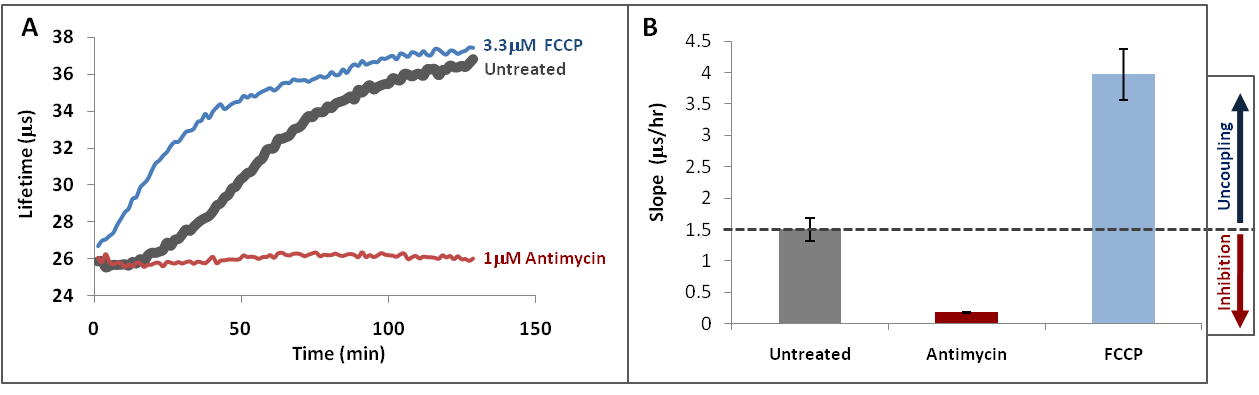
Using an optimized protocol, the uncoupler FCCP, and the complex III inhibitor Antimycin A revealed typical O2 consumption profiles illustrating a capacity to specifically detect perturbed OXPHOS immediately post-treatment.
Advantages MitoXpress®
- Sensitive and specific readout.
- Signal appears long before cell death.
- HTS enabled to at least 384-well format.
- Continuous noninvasive measurement.
- Results will point to where to look for the mechanism of action.